Morning Stiffness in Joints: What It Means and Where MotionPrimeX Fits
Quick answer
Morning stiffness that eases within 30 minutes of moving matches how NIAMS describes osteoarthritis. Stiffness lasting longer on most mornings, or joints that are red, hot or swollen, need a doctor. Exercise and tai chi have strong guideline backing, and MotionPrimeX can be part of a daily routine alongside them.
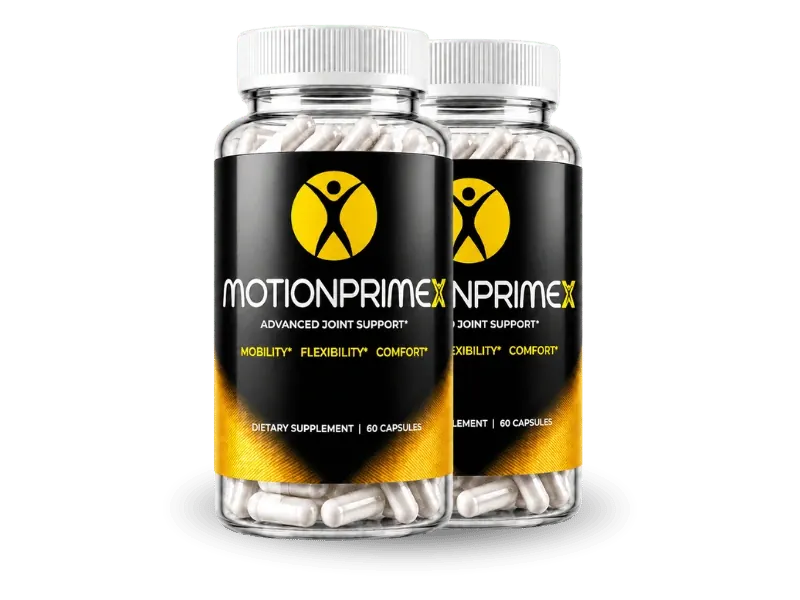
Stiff knees or fingers first thing in the morning are common, and the way the stiffness behaves says something useful. This post explains what public health sources say it means, when it is a reason to see a doctor, and how the MotionPrimeX promise about mornings holds up.
What does morning stiffness that improves with activity mean?
Stiffness after rest that loosens up soon after you start moving matches how health agencies describe osteoarthritis (OA). NIAMS lists joint pain and stiffness after rest as typical OA symptoms, with stiffness "usually lasting less than 30 minutes" (NIAMS, Osteoarthritis (health topic)).
The CDC describes the same pattern: pain, stiffness after rest, swelling and less movement. OA most often affects the hands, hips, back and knees, and about 33 million U.S. adults have it (CDC, Osteoarthritis).
A pattern is not a diagnosis, though. Only a clinician who examines you can say what is behind your stiffness, and other kinds of arthritis need different care.
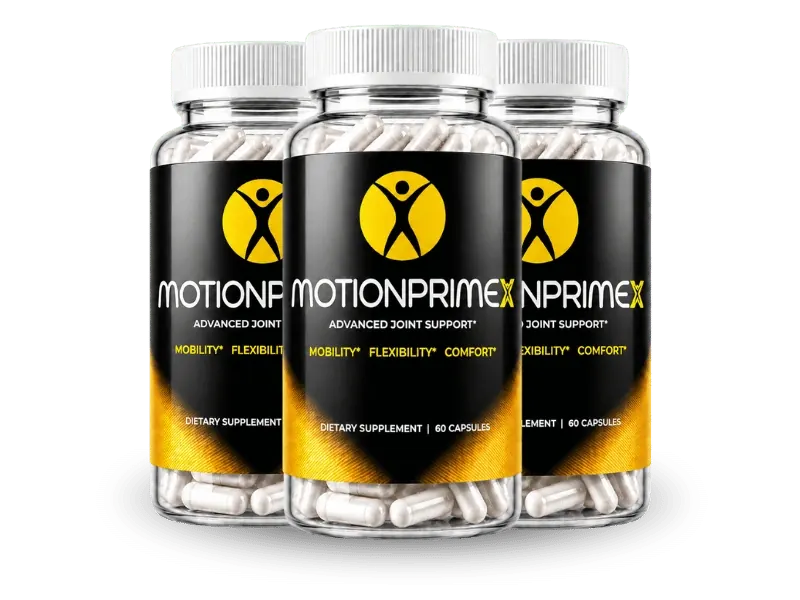
Thinking about MotionPrimeX? The best price is on the 6-bottle pack.
6 bottles for $294, $49 a bottle. 60-day money-back guarantee · Free US shipping on 3+ bottles · Secure checkout.
What does typical OA morning stiffness look like over the first half hour?
Picture the first 30 minutes after you get out of bed. This is the pattern NIAMS describes for OA, laid out step by step, with the point where it stops being typical.
- Wake
You wake up stiff
A night of rest is exactly the kind of rest after which OA joints feel stiff, according to NIAMS and the CDC.
- Moving
You start moving
Getting up, walking to the kitchen, opening jars. Stiffness that loosens as you move is the pattern people search for.
- Under 30 min
Mostly loose
NIAMS says OA stiffness usually lasts less than 30 minutes. This is the typical end point.
- Over 30 min
Not typical for OA
Stiffness that lasts longer most mornings is a reason to book a visit. Do not wait it out with supplements.
Try timing it for a week. Write down the minutes until your joints feel loose each morning. That one number is useful for your doctor and for judging anything you try.
Morning stiffness: RA vs OA, what is the difference?
They are different diseases. Our sources describe OA in detail but say very little about rheumatoid arthritis (RA), so we will not fill the gaps with guesses.
| Question | Osteoarthritis (NIAMS, CDC) | Rheumatoid arthritis (our sources) |
|---|---|---|
| What is it? | Joint tissues break down over time; the most common type of arthritis | A different disease from OA; the pages we used do not describe it |
| How long is morning stiffness? | Usually less than 30 minutes (NIAMS) | No figure on the pages we opened |
| Other symptoms | Pain, swelling, reduced movement | Not described on the pages we opened |
| Which joints? | Most often hands, hips, back and knees (CDC) | Not described on the pages we opened |
| First steps in care | Exercise, weight management, braces, medicines (NIAMS) | Needs a doctor's diagnosis and plan |
The NIAMS and CDC pages are osteoarthritis pages, and the Arthritis Foundation guide we used covers supplements, not RA symptoms. That is why the RA column is thin. The practical point stands anyway: if your stiffness does not fit the OA pattern above, a doctor needs to sort out which disease it is.
When should morning stiffness send you to a doctor?
Book a visit if your stiffness breaks the usual OA pattern or comes with other warning signs. These are the ones to act on:
- Stiffness lasting more than 30 minutes on most mornings
- A joint that is red, hot or swollen
- New pain, or pain that keeps getting worse
- Pain from activity that does not improve, which the CDC says is a reason to contact a provider
What helps morning stiffness, if not a supplement?
Regular movement has the best backing. The 2019 ACR/Arthritis Foundation guideline strongly recommends exercise, tai chi, weight loss for knee or hip OA if you are overweight, self-management programs, and canes or braces (Arthritis Rheumatol 2020, Kolasinski et al., 2019 ACR/AF OA guideline (abstract)).
Those figures come from the CDC, which says activity can reduce joint pain and improve function and mood (CDC, About Physical Activity and Arthritis). Low-impact choices include brisk walking, cycling, swimming, water exercise, dancing and tai chi. Start slowly and build up.
NIAMS describes care that starts with education and a supervised exercise program: stretching, strengthening, water-based, balance and low-impact work, plus weight management (NIAMS, Osteoarthritis: Diagnosis, Treatment, and Steps to Take). A physical therapist can set that up. Our joint health guide puts it all in one place.
Can MotionPrimeX ease morning stiffness in 3-4 weeks?
No study shows that. The sales page FAQ promises less morning stiffness "within 3-4 weeks", bigger changes "between weeks 6-10" and lasting results after "3-6 months", but no trial of the product exists. Our results timeline sets each date beside the studies.
- Marketing only
Reduces stiffness, especially in the morning
Sales pageNot tested on this formula. No source we opened shows any supplement shortens OA morning stiffness.
- Marketing only
Less morning stiffness within 3-4 weeks
Sales page FAQGAIT ran 24 weeks and still found glucosamine no better than placebo. The boswellia trials ran about 90 days.
- Marketing only
Bigger changes between weeks 6-10
Sales page FAQNo study of the product measured anything at any week.
- On the label
Mobility, flexibility, comfort
Front of the bottleSupport words with an asterisk. They make no promise about mornings or timing.
The closest real evidence is for boswellia. A 2020 analysis favored it for pain, stiffness and function, but the trials varied wildly and several had a high risk of bias (BMC Complement Med Ther 2020, Yu et al., Boswellia meta-analysis). MotionPrimeX has 133.3 mg of an extract whose type is not named. Our evidence review covers the rest.
MSM is the other ingredient people link with stiffness. A 2017 review reported less pain and stiffness in several joint trials, though one showed only marginal gains and two of its authors have industry ties (Nutrients 2017, Butawan et al., MSM applications and safety). Typical use is 1,000 to 3,000 mg a day; MotionPrimeX has 16.7 mg, under 2% of the low end.
If you try it, keep your minutes-to-loose log and use the 60-day refund window as the test period. Keep exercising either way, so you can tell what made the difference.
Questions about morning stiffness
What does morning stiffness that improves with activity mean?
Stiffness after rest that eases within half an hour of moving matches how NIAMS describes osteoarthritis. Only a clinician can confirm the cause.
Is morning stiffness lasting more than 30 minutes a concern?
Yes, it is worth a doctor's visit. NIAMS says OA stiffness usually lasts less than 30 minutes, so longer stiffness on most mornings does not fit the usual OA pattern.
How can you tell RA from OA morning stiffness?
You cannot settle it at home; a clinician has to examine you. NIAMS puts OA stiffness at usually under 30 minutes, and the OA pages we used do not describe RA.
What causes morning stiffness in joints?
In osteoarthritis, joint tissues break down over time and the joints feel stiff after rest, such as a night's sleep. Other causes exist, and our sources do not cover them.
Why are my hands stiff in the morning?
Hands are one of the joints OA most often affects, per the CDC. Hand stiffness that lasts over 30 minutes, or joints that are red, hot or swollen, need a doctor's look.
Is there a supplement for morning stiffness relief?
No source we opened shows a supplement shortens morning stiffness. A 2020 boswellia analysis favored it on stiffness scores, but the trials were small and inconsistent.
Does exercise help morning stiffness?
The CDC says regular activity can reduce joint pain and improve function, and guidelines strongly recommend exercise and tai chi for OA. Aim for 150 minutes a week, built up slowly.
Does losing weight help stiff knees?
For people with knee or hip OA who are overweight, the 2019 guideline strongly recommends weight loss. NIAMS also lists weight management among the first steps of OA care.
How long does MotionPrimeX take to help morning stiffness?
The sales page says 3-4 weeks, but no study supports that date. Time your stiffness each morning and judge it within the 60-day refund window.
Why are joints stiff in the morning, and does MotionPrimeX help?
Joints often stiffen after rest. If it eases within about 30 minutes of moving, it matches how NIAMS describes osteoarthritis. Longer stiffness, or red, hot or swollen joints, calls for a doctor.
Does MotionPrimeX help morning stiffness?
The sales page claims easier mornings in 3 to 4 weeks, but no study of MotionPrimeX supports it. Exercise and tai chi have stronger guideline backing, so a capsule is an extra at most.
Page check
Written by
Checks every amount against the sales page and the pack, and every health line against NIH, CDC, NCCIH and Cochrane sources.
Medically reviewed by
Dr. Kevin D. Plancher, MD, Physician
Medical reviewer. Review date: October 12, 2026.
- Last checked October 12, 2026
- Facts from the bottle, the sales page and the sources cited above
- Found an error? Write to [email protected] or read how we check facts