How to Choose a Joint Supplement: Six Checks and an Honest Score
Quick answer
Check six things: doses near the amounts trials used, a stated glucosamine and chondroitin source, no cartilage-rebuilding promises, a named maker with a lab report, one clear return rule, and interaction warnings. MotionPrimeX scores about 1.9 out of 5: every amount is printed and the shellfish source is named, but most doses sit far below studied levels.
What should you check before you buy a joint supplement?
Six checks cover most of what matters: dose, source, claims, maker, returns and interactions. They work for any brand, and near the end of this guide we run MotionPrimeX through each one.
Compare each dose with the studies
Look for amounts close to what trials used, such as 1,500 mg of glucosamine a day.
Find the glucosamine and chondroitin source
Shellfish, grain or animal cartilage. The label or the seller should say which.
Read the claims
"Supports joint comfort" is a label claim. "Rebuilds cartilage" is a promise no study backs.
Look for a named maker
A company name and a lab report you can match to your bottle's lot.
Get one clear return rule
The refund window, whether bottles go back, and who pays postage, in writing.
Check for interaction warnings
Blood thinners, diabetes, liver disease and glaucoma should all be mentioned.
None of these checks can tell you whether a product will help your knees. They tell you whether the seller is giving you enough to judge it, which is the part you control before you pay.
How do you tell if the doses are close to studied amounts?
Put the label next to the trials. The table gives the amounts studies used, and the meter below shows how far one real label, MotionPrimeX, sits from each of them.
| Ingredient | Amount used in studies | What to look for on a label |
|---|---|---|
| Glucosamine | 1,500 mg a day (GAIT; usual package dose) | The form: sulfate or hydrochloride |
| Chondroitin | 1,200 mg a day (GAIT); 600 to 1,200 mg (LiverTox) | The source animal or material |
| Boswellia | 100 to 250 mg of a named, enriched extract | The extract name or its AKBA content |
| Turmeric | Curcumin extracts, 93 mg to 2 g a day | "Curcumin extract", not root powder |
| MSM | 1,000 to 3,000 mg a day (typical use) | Grams, not milligrams |
| Bromelain | 500 to 2,000 mg, three times a day | A gram-range amount |
Label: 1,000 mg. Studied: 1,500 mg a day (GAIT; usual package dose). (NEJM 2006, Clegg et al., GAIT trial) (Cochrane 2005, Towheed et al., Glucosamine for osteoarthritis) (LiverTox (NIDDK), Glucosamine)
Label: 100 mg. Studied: 1,200 mg a day (GAIT); 600 to 1,200 mg (LiverTox). (NEJM 2006, Clegg et al., GAIT trial) (LiverTox (NIDDK), Glucosamine)
Label: 133.3 mg. Studied: 100 to 250 mg a day of named, enriched extracts. (Cochrane 2014, Cameron and Chrubasik, Oral herbal therapies for OA) (BMC Complement Med Ther 2020, Yu et al., Boswellia meta-analysis)
Label: 100 mg. Studied: 93 mg to 2 g a day of enhanced curcumin products. (BMJ Open Sport Exerc Med 2021, Paultre et al., Turmeric/curcumin for knee OA) (Complement Ther Med 2021, High- vs low-dose curcumin in knee OA)
Label: 16.7 mg. Studied: 1,000 to 3,000 mg a day (typical use). (Arthritis Foundation, Supplement and Herb Guide for Arthritis Symptoms)
Label: 16.7 mg. Studied: 500 to 2,000 mg, three times a day. (Arthritis Foundation, Supplement and Herb Guide for Arthritis Symptoms)
Form matters too. GAIT used glucosamine hydrochloride, and a Cochrane review found clear benefit mainly in trials of one prescription glucosamine sulfate brand (Cochrane 2005, Towheed et al., Glucosamine for osteoarthritis). A label that says "glucosamine sulfate" is not that brand. Never take extra capsules to close a dose gap; that has not been tested either.
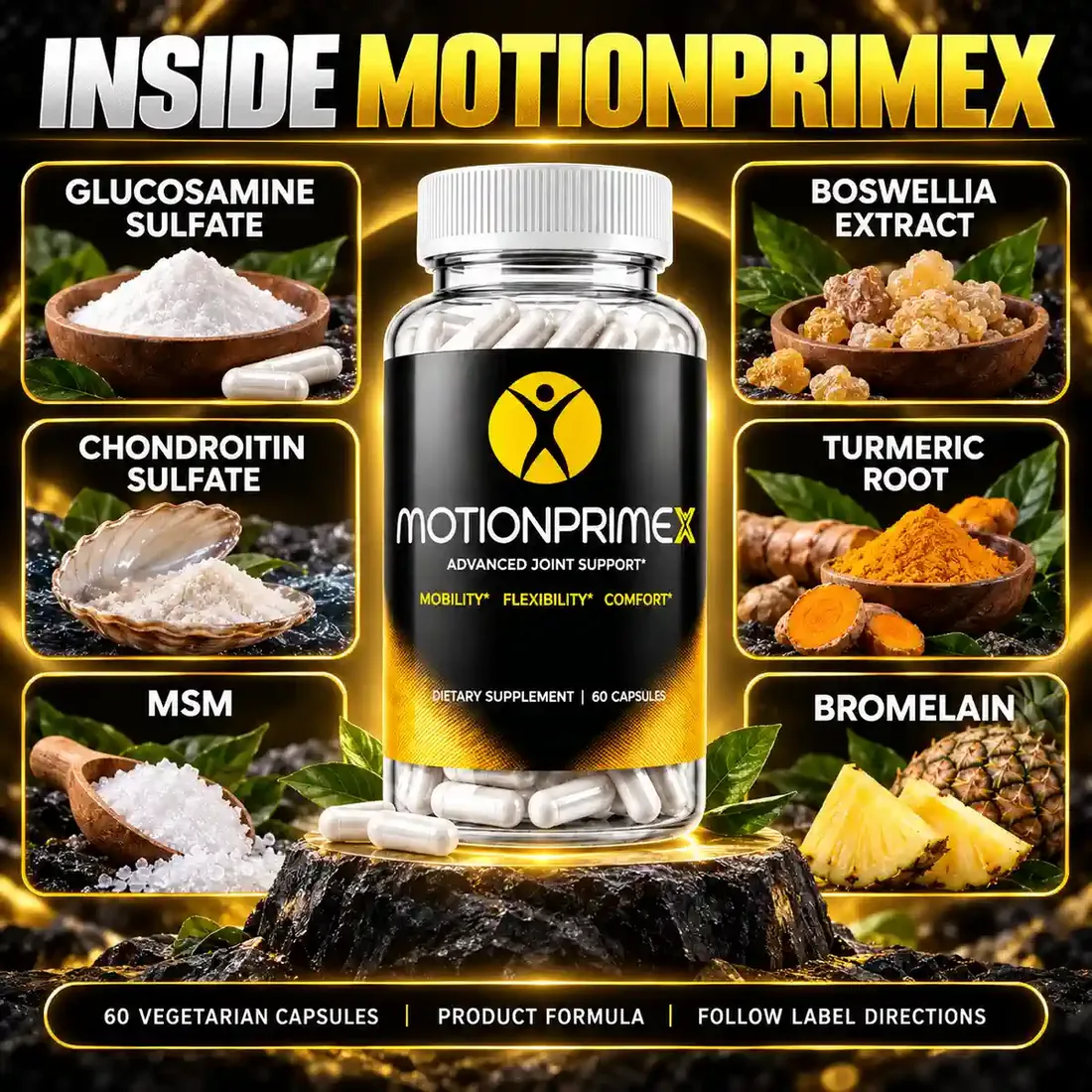
Every amount in MotionPrimeX is listed on the Supplement Facts page.
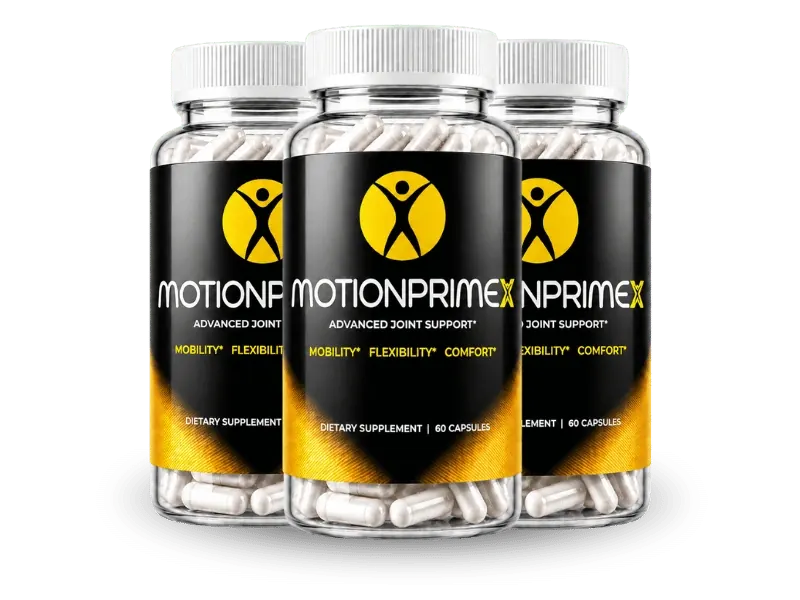
Thinking about MotionPrimeX? The best price is on the 6-bottle pack.
6 bottles for $294, $49 a bottle. 60-day money-back guarantee · Free US shipping on 3+ bottles · Secure checkout.
Why does the glucosamine source matter?
Because of allergies and diet. Glucosamine is usually made from shellfish shells or by grain fermentation (LiverTox (NIDDK), Glucosamine), and the Arthritis Foundation says to avoid it with a shellfish allergy.
Chondroitin usually comes from animal cartilage, such as cow, pig or shellfish, according to the Arthritis Foundation. So a line like "vegetarian capsules" describes the shell, not what is inside it. Look for the source of each ingredient, not the capsule.
MotionPrimeX says its glucosamine comes from crustacean shellfish (crayfish), which is a plus for clarity. It also calls its capsules "100% vegetarian" and does not name the chondroitin source, which is a minus. More on this ingredient is on the glucosamine sulfate page.
Which marketing claims are red flags?
Claims that a joint will be rebuilt, or that a capsule matches a drug. A supplement label may describe support for normal structure or function, but it may not claim to treat a disease (FDA, Structure/Function Claims).
- On the label
Mobility, Flexibility, Comfort*
MotionPrimeX bottle frontA structure/function claim with the FDA asterisk. Acceptable wording, though not proof the product works.
- Marketing only
Supports joint cushioning & cartilage rebuilding
Sales pageNCCIH calls any effect of glucosamine or chondroitin on joint structure uncertain.
- Marketing only
8 clinically-studied ingredients
Sales pageThe ingredients were studied elsewhere, mostly at bigger doses. Quercetin and methionine have no joint trials we could find.
- Marketing only
Comparable to some NSAIDs
Sales page, on bromelainNCCIH reports no osteoarthritis evidence for bromelain, and the dose here is 16.7 mg.
- Marketing only
Only 287 Units Remaining
Sales page stock counterThe FTC lists fake time limits as a dark pattern (FTC, Report on dark patterns (press release)). We cannot prove this counter is fake, and our price does not change.
- Not shown
Study of the finished product
NowhereNo trial of this formula has been published.
The FTC adds that testimonials never prove a health effect and that results for one dose cannot back a different one (FTC, Health Products Compliance Guidance). Star ratings and before-and-after stories are not evidence.
How do you check the maker and the return rule?
Ask who made it, whether a lab report exists for your lot, and how refunds work, before you pay. Here is how many key facts MotionPrimeX publishes.
8 of 12 key facts are published
- Product name and formPublished
- Capsules per bottlePublished
- Daily servingPublished
- Ingredient namesPublished
- Amount of each ingredientPublished
- Prices and packsPublished
- Guarantee lengthPublished
- Allergen (shellfish)Published
- Supplement Facts panel imageNot published
- Manufacturer namedNot published
- Third-party lab reportNot published
- Study of this productNot published
- A named manufacturer, not just a city. "Made in USA, Aurora, CO" names no company.
- "FDA registered facility" describes a building, not the product. The FDA does not approve supplements before sale.
- A certificate of analysis that matches the lot number on your bottle.
- One written refund rule: the window, whether bottles go back, and who pays postage.
For MotionPrimeX, the sales page says no return of bottles is needed, while the brand's refund policy page asks for bottles back at your cost. Ask support which applies, in writing. What we know about testing is on the testing and quality page.
How does MotionPrimeX score on the six checks?
About 1.9 out of 5. MotionPrimeX prints every amount and names its shellfish source, but most doses sit far below studied levels, its claims go past the evidence, and the maker is not named.
Boswellia is in range. Glucosamine is 67% of the GAIT dose, chondroitin about 8%, MSM and bromelain about 2 to 3%.
Crayfish named for the glucosamine. The chondroitin source is missing and the "vegetarian" line confuses.
Cartilage rebuilding, an NSAID comparison and "durable structural improvement" are not backed.
No company named, no public certificate of analysis.
Sixty days on every page, but two different rules on returning bottles.
The sales page names blood thinners and shellfish. We saw nothing on blood sugar, liver disease or glaucoma.
An editorial score is our judgment of what is published, not a customer rating and not a verdict on whether it will help you. If you still want to try it, the 60-day window is the fair test.
Questions about choosing a joint supplement
What is the best supplement for knee pain?
No supplement is a first choice in the 2019 osteoarthritis guideline, which puts exercise, weight loss and tai chi first. If you try one, pick doses near studied amounts.
Do any joint supplements really work?
The results are mixed. GAIT found glucosamine and chondroitin no better than placebo overall, while small studies of enriched boswellia extracts suggest some pain relief.
Glucosamine sulfate vs hydrochloride: which is better?
It is unsettled. GAIT used hydrochloride, Mayo Clinic researchers favor sulfate, and one head-to-head study found no real difference.
Is there glucosamine without shellfish?
Yes. LiverTox says glucosamine is made from shellfish shells or by grain fermentation, so look for a label that names a non-shellfish source.
What is the glucosamine dose in studies?
Usually 1,500 mg a day, often as 500 mg three times a day. The GAIT trial used 1,500 mg daily for 24 weeks.
How much chondroitin per day?
GAIT used 1,200 mg a day. LiverTox lists 200 to 400 mg three times a day, which is 600 to 1,200 mg in total.
Is an FDA registered facility the same as FDA approved?
No. Registration covers the building. The FDA does not have the authority to approve dietary supplements before they are sold.
Is MotionPrimeX legit or a scam?
It prints real amounts and a 60-day guarantee, so we do not call it a scam. But the maker is unnamed, the refund rules conflict, and some claims outrun the evidence.
Page check
Written by
Checks every amount against the sales page and the pack, and every health line against NIH, CDC, NCCIH and Cochrane sources.
Medically reviewed by
Dr. Kevin D. Plancher, MD, Physician
Medical reviewer. Review date: October 12, 2026.
- Last checked October 12, 2026
- Facts from the bottle, the sales page and the sources cited above
- Found an error? Write to [email protected] or read how we check facts