Joint Health Guide: Osteoarthritis, Exercise and Where Supplements Fit
Quick answer
Osteoarthritis is joint tissue breaking down over time, and about 33 million US adults have it. Guidelines put exercise, weight loss if overweight, tai chi, self-management, canes and braces first. OA stiffness after rest usually lasts under 30 minutes; longer stiffness or hot, swollen joints need a doctor. Supplements come last, and glucosamine is recommended against.
What is osteoarthritis?
Osteoarthritis (OA) is a joint disease in which the tissues of a joint break down over time (NIAMS, Osteoarthritis (health topic)). It is the most common type of arthritis, and it becomes more common with age.
The CDC says OA can change bone, cartilage and other joint tissues (CDC, Osteoarthritis). There is no cure, but the agency says there are proven ways to manage symptoms and reduce pain, and most of them do not come in a bottle.
The usual signs are pain, stiffness after rest, some swelling and less range of movement. Stiffness that eases once you get going is the classic pattern.
How is morning stiffness from OA different from RA?
Osteoarthritis stiffness after rest is usually short, under 30 minutes, and eases as you move. Rheumatoid arthritis (RA) is a different disease, and stiffness that lasts much longer, or joints that are hot and swollen, are reasons to see a doctor.
| Sign | Fits the usual OA pattern | Get it checked |
|---|---|---|
| Stiffness after rest | Less than 30 minutes, easing with movement | Well over 30 minutes most mornings |
| How the joint looks | Maybe mild swelling | Red, hot or clearly swollen |
| Which joints | Knees, hips, hands or back | Joints outside that pattern, or many flaring at once |
| Pain over time | Slow build over months or years | New, sudden or quickly worsening pain |
| Response to activity | Short bouts of movement help | Pain from activity that does not settle |
This table is a prompt for a visit, not a way to diagnose yourself. Only a clinician can tell OA from RA or other joint diseases. Our post on what morning stiffness means goes further.
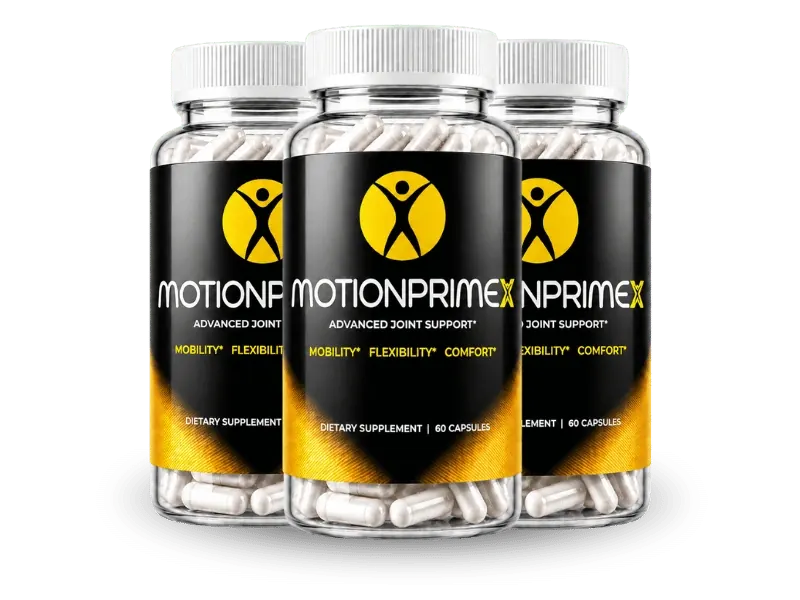
Thinking about MotionPrimeX? The best price is on the 6-bottle pack.
6 bottles for $294, $49 a bottle. 60-day money-back guarantee · Free US shipping on 3+ bottles · Secure checkout.
What do the guidelines actually recommend for OA?
Movement, weight and self-care come first. The 2019 American College of Rheumatology and Arthritis Foundation guideline strongly recommends exercise, weight loss for people with knee or hip OA who are overweight, self-management programs, tai chi, canes, and hand and knee braces (Arthritis Rheumatol 2020, Kolasinski et al., 2019 ACR/AF OA guideline (abstract)).
| Approach | Guideline view | Notes |
|---|---|---|
| Exercise | Strongly recommended | Walking, strength, water-based and balance work all count |
| Weight loss if overweight | Strongly recommended for knee and hip OA | Less load on the joints that carry you |
| Tai chi | Strongly recommended for knee and hip OA | Slow, low-impact movement with balance practice |
| Self-management programs | Strongly recommended | Classes that teach pacing and coping skills |
| Cane; hand and knee braces | Strongly recommended | Fitted aids that offload a painful joint |
| Topical NSAIDs (knee) | Strongly recommended | Gels rubbed on the knee |
| Glucosamine | Strongly recommended against (per NCCIH and AAFP) | For knee, hip and hand OA |
| Chondroitin | Conditional, hand OA only | Recommended against for knee and hip |
NIAMS adds that care starts with education and a supervised exercise program, plus weight management (NIAMS, Osteoarthritis: Diagnosis, Treatment, and Steps to Take). Medicines and injections come next, and surgery is kept for when other treatments fail.
- Step 1
Learn and plan
Know what OA is and set goals, often through a self-management class.
- Step 2
Move most days
Build toward the CDC's weekly activity target with low-impact choices.
- Step 3
Ease the load
Lose weight if you carry extra, and try a cane or brace for a sore knee.
- Step 4
Add treatment
Topical or oral pain relievers, or injections, guided by your doctor.
- Step 5
Consider surgery
Joint replacement is an option when other steps no longer help.
How much exercise helps, and what kind?
At least 150 minutes a week of moderate activity, plus muscle-strengthening on 2 or more days (CDC, About Physical Activity and Arthritis). Short bouts of 5 or 10 minutes count, and older adults should add balance work.
Brisk walking
Easy to start, free, and simple to build up in 10-minute pieces.
Swimming and water exercise
Both are on the CDC list of low-impact options for people with arthritis.
Cycling
Low impact, and a stationary bike works in any weather.
Tai chi
Slow movement and balance work, strongly recommended for knee and hip OA.
Strength work
Two days a week or more, as the CDC advises, using bands, weights or body weight.
Dancing
The CDC lists it among low-impact choices. Pick music you like.
The CDC says activity can reduce joint pain and improve function and mood. Start slowly, and contact your provider if pain from activity does not improve. Ways to fit a supplement around this routine are on how to use MotionPrimeX.
When is joint pain a reason to see a doctor?
When the signs do not fit everyday wear, or when self-care is not working. A visit also makes sense before you add any supplement to a list of prescription medicines.
- Morning stiffness that lasts well over 30 minutes most days
- A joint that is red, hot or clearly swollen
- Pain from activity that does not improve, as the CDC advises
- New pain, or pain that is getting worse
- You take blood thinners or diabetes medicine and want to try a joint supplement
Bring a short list: which joints hurt, when stiffness starts and how long it lasts, what helps, and every medicine and supplement you take. Those notes make a short visit far more useful.
Where do supplements fit in?
At the edge, after the basics. The guideline strongly recommends against glucosamine, according to NCCIH and the AAFP, and backs chondroitin only for hand OA (NCCIH Clinical Digest, Arthritis and Complementary Health Approaches).
Some negative ratings reflect a lack of good evidence rather than proof of no benefit (Am Fam Physician 2020, Barry, summary of the ACR OA guideline). Boswellia has small, low-quality studies that suggest less OA pain. Turmeric and curcumin have early positive results, and one meta-analysis calls curcuminoids an add-on, not a replacement for usual care.
MotionPrimeX is a dietary supplement, not an OA treatment, and it does not rebuild cartilage. Most of its amounts sit below studied doses. How to judge any joint product is set out in how to choose a joint supplement, and each ingredient is weighed on the ingredients page.
Questions about joint health and osteoarthritis
Do joint supplements work for osteoarthritis?
The evidence is weak. The 2019 ACR and Arthritis Foundation guideline recommends against glucosamine and backs chondroitin only for hand OA.
What helps knee osteoarthritis besides supplements?
Exercise, weight loss if overweight, tai chi, self-management programs, a cane and a knee brace are all strongly recommended by the 2019 guideline. Topical NSAIDs are too.
What is the difference between RA and OA morning stiffness?
OA stiffness after rest usually lasts under 30 minutes. Longer stiffness, or hot and swollen joints, can point to another disease such as RA and needs a doctor.
What does morning stiffness that improves with activity mean?
It fits the usual osteoarthritis pattern, where stiffness after rest eases within about 30 minutes of moving. A doctor can confirm it.
Is walking good for knee osteoarthritis?
Yes, for most people. The CDC lists brisk walking as a low-impact choice and says activity can reduce joint pain.
Does losing weight help knee pain?
The 2019 guideline strongly recommends weight loss for people with knee or hip OA who are overweight.
Does tai chi help arthritis?
The 2019 guideline strongly recommends tai chi for knee and hip osteoarthritis, and NCCIH reports the same.
Do knee braces help osteoarthritis?
Hand and knee braces are strongly recommended in the 2019 guideline. A clinician or physical therapist can help with fit.
Can a supplement rebuild cartilage?
Not on current evidence. NCCIH says any effect of glucosamine or chondroitin on joint structure is uncertain, and the GAIT structure study found no difference in joint space width compared with placebo.
Page check
Written by
Checks every amount against the sales page and the pack, and every health line against NIH, CDC, NCCIH and Cochrane sources.
Medically reviewed by
Dr. Kevin D. Plancher, MD, Physician
Medical reviewer. Review date: October 12, 2026.
- Last checked October 12, 2026
- Facts from the bottle, the sales page and the sources cited above
- Found an error? Write to [email protected] or read how we check facts